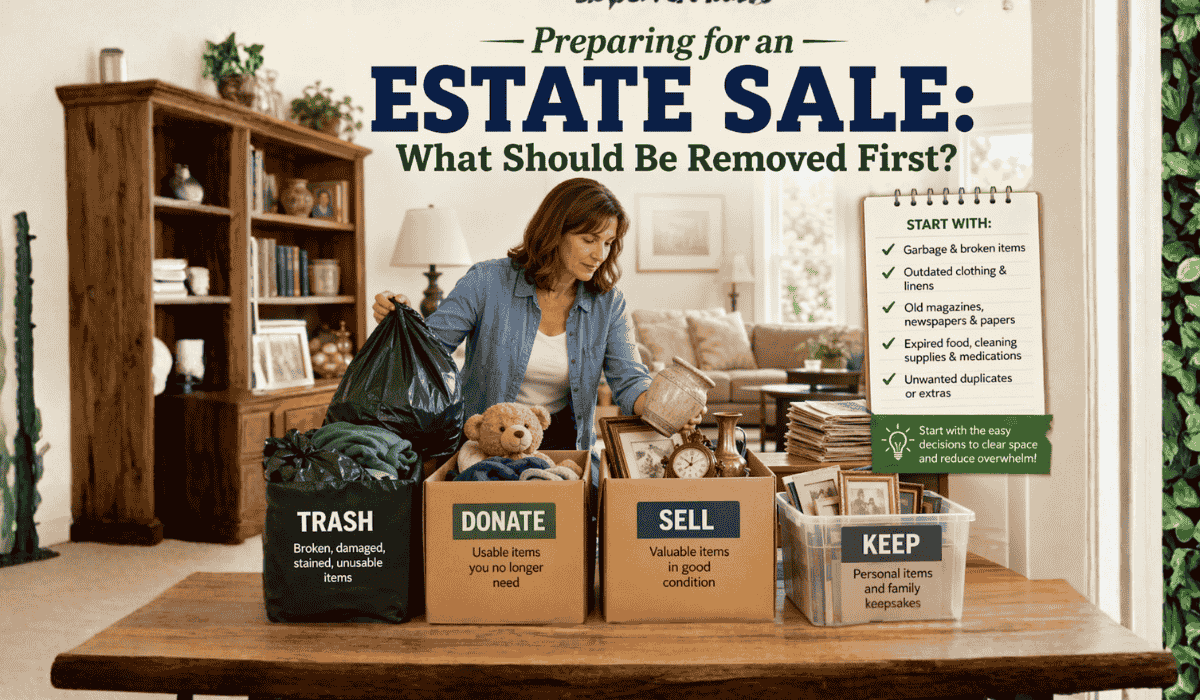
Preparing for an estate sale can feel overwhelming, especially when a home contains years of personal belongings, family keepsakes, paperwork, and household items.
Before an estate sale begins, families should take time to remove anything that is private, sentimental, or not intended for sale.
A clear plan can make the process easier and help avoid confusion once items are organized and priced.
Removing personal items in advance also allows the estate liquidation process to move more efficiently while helping families feel more confident about what will remain in the home.
For families planning an upcoming estate sale, reviewing the
estate liquidation process early can help create a smoother experience from start to finish.
Start With Important Documents
One of the first things families should remove before an estate sale is important paperwork.
Documents can easily get mixed in with books, drawers, filing cabinets, or desk contents if they are not separated early.
Items to remove include:
- Birth certificates
- Marriage certificates
- Social Security cards
- Passports
- Tax records
- Insurance policies
- Wills and trusts
- Property deeds
- Bank statements
- Medical records
- Military records
- Vehicle titles
These documents should be placed in a secure location before the estate sale team begins sorting through the property.
Remove Personal Photographs and Family Keepsakes
Many homes contain photo albums, framed family pictures, scrapbooks, heirlooms, and sentimental keepsakes that are easy to overlook during the early stages of estate sale preparation.
Families should walk through every room carefully and remove anything with sentimental value before the sale begins.
Examples may include:
- Family photo albums
- Baby books
- Handwritten letters
- Holiday ornaments with family meaning
- Children's artwork
- Graduation memorabilia
- Wedding keepsakes
- Family Bibles
- Personal collections
- Heirloom jewelry
Even if some items do not appear valuable from a financial perspective, they may have emotional importance that cannot be replaced later.
Separate Anything That Is Not for Sale
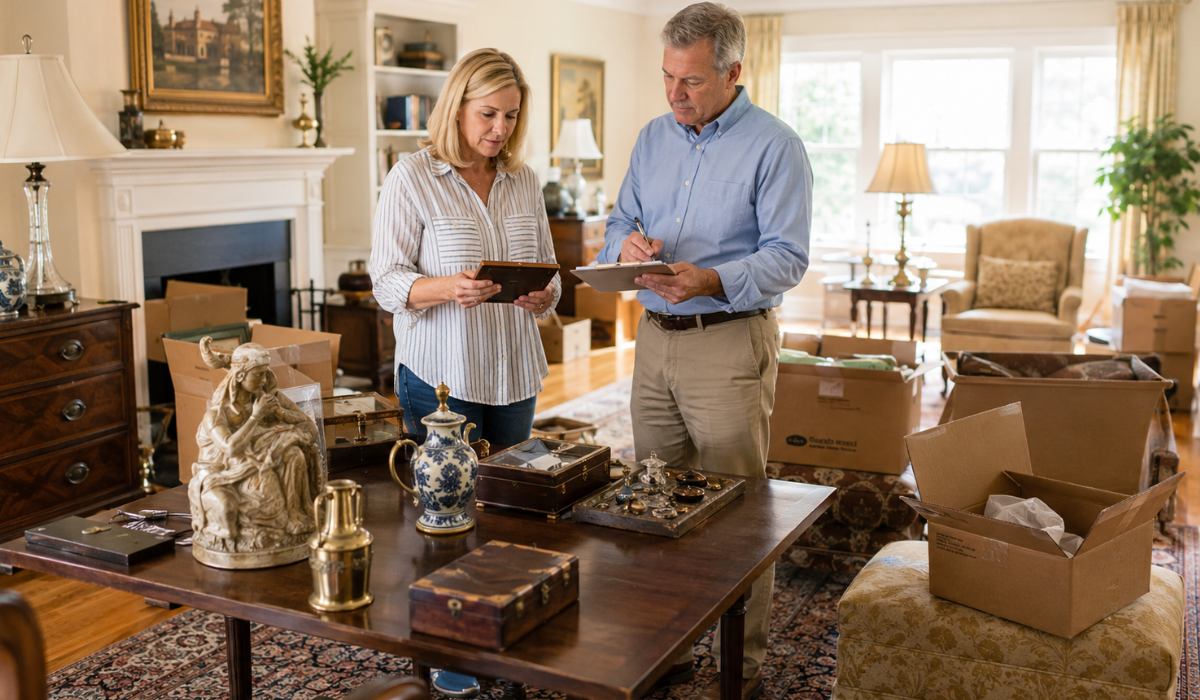
Before the home is organized for an estate sale, families should clearly identify which items they want to keep.
This helps avoid confusion and prevents accidental sales.
Some families place stickers on items they are keeping, while others move those belongings to a separate room, garage, or off-site storage location.
Items commonly removed include:
- Furniture being passed down to relatives
- Favorite kitchen items
- Special artwork
- Family antiques
- Personal electronics
- Clothing with sentimental value
- Decorative pieces intended for another home
Removing these items early can help simplify the rest of the preparation process.
Take Out Medications and Hazardous Materials
Prescription medications, cleaning chemicals, paint, gasoline, firearms, and other hazardous materials should be removed before an estate sale.
These items are generally not appropriate for sale and may create safety concerns.
Examples include:
- Prescription medications
- Over-the-counter medicine
- Cleaning chemicals
- Paint and paint thinner
- Fertilizers and pesticides
- Gasoline containers
- Ammunition
- Fireworks
- Sharp tools stored loosely
Families should safely dispose of these materials according to local regulations before sale preparation begins.
Remove Valuables That Need Extra Protection
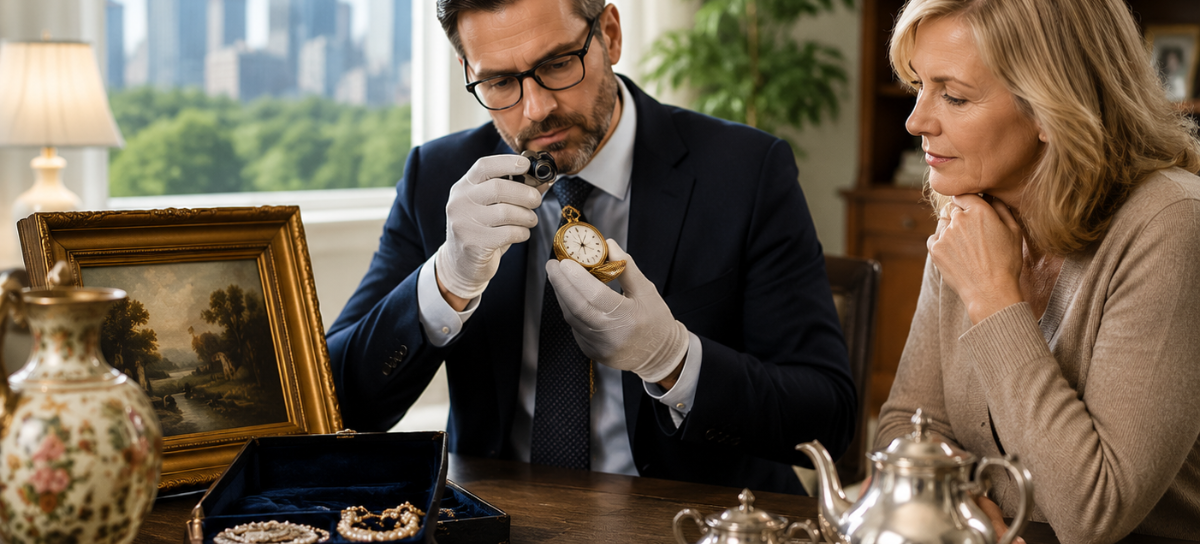
Some valuables may need to be removed temporarily for safekeeping until they can be appraised, sold separately, or distributed to family members.
Examples include:
- Fine jewelry
- Rare coins
- Precious metals
- Luxury handbags
- Collectible watches
- Important artwork
- Rare collectibles
Families who are unsure about the value of certain items may want to set them aside until they can be reviewed more carefully.
Organize Closets, Drawers, and Storage Areas
Closets, cabinets, basements, attics, and garages often contain a mix of personal belongings, sale items, and items that should be discarded.
Taking time to organize these spaces before the estate sale process begins can make the home easier to sort and stage.
Families do not need to completely clean out the property, but they should make an effort to:
- Remove trash
- Throw away expired items
- Separate donation items
- Group similar belongings together
- Identify hidden valuables
- Empty locked drawers or safes
This step can save time later and make the home feel more.
Avoid Throwing Away Items Too Quickly
Many families make the mistake of throwing away items before they fully understand what may have value.
Old furniture, vintage clothing, collectibles, artwork, coins, records, tools, glassware, and even everyday household items may attract buyers during an estate sale.
Before removing large amounts of property, it can help to make a list of questionable items and review them carefully. Some things that seem unimportant may still have resale value.
Decide What Will Be Donated
Not every item in a home will be included in an estate sale. Families may want to donate certain belongings that have limited resale value but could still help others.
Common donation items include:
- Everyday clothing
- Linens and towels
- Basic kitchen items
- Books
- Toys
- Small furniture pieces
- Household goods
Separating donation items in advance can help reduce clutter and make the sale preparation process easier.
Create a Room-by-Room Checklist
Preparing for an estate sale is often easier when families go room by room instead of trying to handle the entire house at once.
A simple checklist may include:
Bedroom Checklist
- Remove family photos
- Take out jewelry and keepsakes
- Separate clothing to keep
- Remove important paperwork
Kitchen Checklist
- Remove personal recipes or family heirlooms
- Separate items staying in the family
- Dispose of expired food and medications
Office Checklist
- Remove tax records and legal paperwork
- Take out financial documents
- Secure passwords and personal information
Garage and Basement Checklist
- Remove hazardous materials
- Organize tools and equipment
- Separate donation items
- Identify valuable collectibles or storage boxes
This type of checklist can help families stay organized and reduce stress throughout the process.
Why Early Preparation Matters
The earlier families begin preparing for an estate sale, the easier the process often becomes.
Waiting until the last minute can create confusion, increase stress, and make it harder to identify sentimental or important items.
Starting early gives families more time to sort belongings, make decisions, and prepare the home for a smoother estate sale experience.
Families who need additional support with organizing, sorting, or preparing a property can also review
packing services alongside estate liquidation resources for extra guidance.
Conclusion
Preparing for an estate sale starts with removing the items that matter most.
Important documents, family keepsakes, personal valuables, and sentimental belongings should always be taken out before sale preparation begins.
Once these items are safely removed, the remaining
estate sale process becomes easier to manage.
A room-by-room approach can help families stay organized while making the home ready for pricing, staging, and selling.
Frequently Asked Questions
Should families remove all furniture before an estate sale?
No, most furniture is typically included in the estate sale unless the family plans to keep it. Families should only remove furniture that has sentimental value or is being passed down.
Are family photos usually sold during an estate sale?
Family photographs should usually be removed before the sale. These items often have sentimental value and are not typically intended for buyers.
What should be done with prescription medications before an estate sale?
Prescription medications should be safely removed and disposed of before the sale begins. They should never be left in the home during an estate sale.
Can valuables stay in the home before the estate sale?
Families may choose to remove high-value items such as jewelry, coins, or collectibles until they are reviewed, appraised, or secured.
Should families clean the house before an estate sale?
Basic cleaning and organization can help make the process easier, but families do not need to fully deep clean the property before preparation begins.
What happens if a family accidentally leaves something in the house?
Families should notify the estate sale team as soon as possible if they realize something important was left behind. Clear labeling and communication can help prevent mistakes.
Is it better to prepare one room at a time?
Yes, preparing one room at a time can make the process more manageable and help families stay organized throughout the estate sale preparation process.