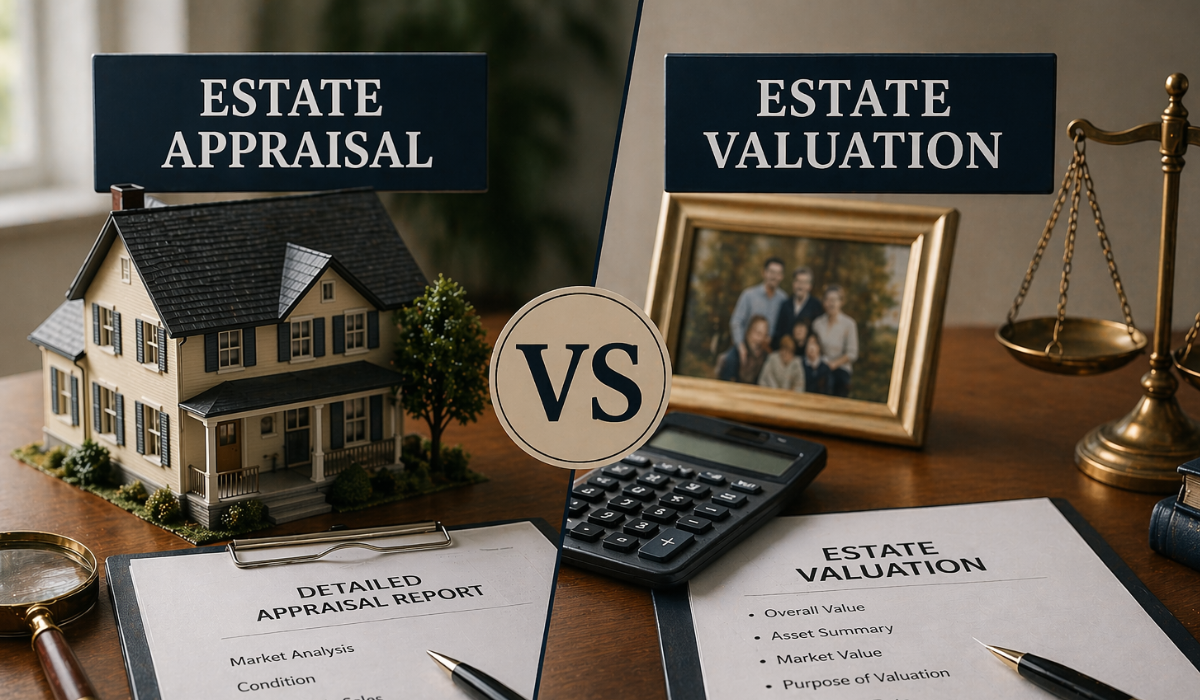
When dealing with an estate, the terms “appraisal” and “valuation” are often used interchangeably.
However, they represent two different processes that serve distinct purposes.
Both are important in understanding the worth of assets, but they are not the same.
In this guide, we will explain the key differences between estate appraisals and estate valuations, their costs, and when each process is needed.
What is an Estate Appraisal?
An estate appraisal is a formal assessment of the value of specific assets, usually conducted by a certified or licensed appraiser.
Appraisals are typically required for specific items of value such as fine art, jewelry, antiques, and real estate.
An appraiser provides an expert opinion on the market value of these items at the time of the assessment.
Appraisals are often used for legal, insurance, or tax purposes, as they offer a precise, third-party evaluation.
When is an Estate Appraisal Needed?
An estate appraisal is usually necessary for high-value items that require an expert’s opinion, such as antiques, fine art, collectibles, or jewelry.
It is also used for insurance purposes to determine replacement values and for legal purposes when the value of specific assets needs to be recorded.
Appraisals help provide a clear, documented value of items for probate proceedings or estate tax calculations.
What is an Estate Valuation?
An
estate valuation, on the other hand, is the process of determining the overall value of the deceased’s entire estate, including real estate, financial assets, personal property, and other holdings.
Estate valuations are typically used for probate purposes, to establish the worth of the estate for distribution to heirs, settling debts, or calculating estate taxes.
The valuation may be conducted by an executor, attorney, or financial advisor, and the approach is usually broader than an appraisal.
When is an Estate Valuation Needed?
An estate valuation is needed during probate to determine the total value of the estate for legal purposes.
It helps in calculating estate taxes, distributing assets among beneficiaries, and ensuring that debts are paid from the estate’s assets.
Estate valuations provide a comprehensive overview of all assets and liabilities in the estate, which is crucial for settling an estate fairly and legally.
Key Differences Between Estate Appraisal and Estate Valuation
Purpose
An estate appraisal provides a detailed assessment of specific assets, typically valuable or unique items.
It focuses on items such as fine art, jewelry, or collectibles.
On the other hand, estate valuation provides a broader view of the estate’s total worth, encompassing all assets and liabilities, including real estate, personal property, and financial assets.
It helps in the legal and tax processes, ensuring that the estate is properly valued for probate and distribution purposes.
Process
An estate appraisal is typically performed by a certified appraiser who specializes in specific types of assets, such as art, jewelry, or antiques.
The appraiser uses their expertise and market comparisons to determine the value.
Estate valuation, however, is usually conducted by an executor or estate professional, who gathers documents, appraisals, and other information to determine the estate’s overall worth.
Estate valuation is often a more general overview and may not require specialized expertise for most assets.
Cost
The cost of an estate appraisal is generally higher than that of an estate valuation because it requires a specialized expert to assess the value of high-end or complex assets.
The cost varies depending on the type of asset and the appraiser’s fees. Estate valuation, being a broader process, can be less expensive.
However, the cost can increase if specialized appraisals for certain assets are needed.
When Each is Needed
Estate appraisals are typically required when specific high-value assets need to be valued.
These could include rare items such as fine art, antiques, or collectibles.
Estate valuations are necessary when a comprehensive view of the entire estate’s worth is needed, especially in the probate process, for tax purposes, and for distributing assets to heirs.
Conclusion
Both
estate appraisals and valuations are essential parts of the estate settlement process.
While appraisals focus on determining the value of individual items, valuations give a broader overview of the estate’s total worth.
Executors and families must understand the distinctions between the two processes and determine which one is appropriate for their specific needs.
Frequently Asked Questions
What is the difference between an estate appraisal and an estate valuation?
An estate appraisal involves determining the value of specific items of value, such as art, antiques, jewelry, or real estate, by a professional appraiser. It provides a precise, expert opinion on the market value of these items. An estate valuation, however, refers to the overall value of the entire estate, including all assets like real estate, financial assets, and personal property. It’s typically used for probate purposes, calculating estate taxes, and distributing assets among heirs.
When should I use an estate appraisal?
You should use an estate appraisal when you need an expert opinion on the value of specific items that are difficult to assess on your own. This includes high-value assets such as rare artwork, jewelry, antiques, or collectibles. Appraisals are also required for insurance purposes or when specific assets need to be documented for legal matters, such as estate taxes or probate.
When is an estate valuation required?
An estate valuation is required when determining the total worth of an estate, which is essential for probate and tax purposes. It helps ensure the fair distribution of assets among heirs and assists in calculating estate taxes. An estate valuation is generally required during the probate process to ensure the estate is legally and fairly settled.
Do I need to hire a professional for estate valuation?
Yes, in many cases, hiring a professional to conduct an estate valuation is necessary, especially when the estate includes complex or high-value assets. Professionals such as attorneys, accountants, or financial advisors typically oversee the valuation of the estate’s assets to ensure that all information is accurate and that legal requirements are met. For specialized assets, such as art or collectibles, a professional appraiser may be required.
Can an estate valuation be done without an appraisal?
Yes, an estate valuation can be done without an appraisal for many of the estate's assets, such as financial accounts, stocks, or bonds, which have easily identifiable values. However, if the estate includes complex or unique items (like rare art or antiques), an appraisal is necessary to provide an accurate valuation of those specific assets.