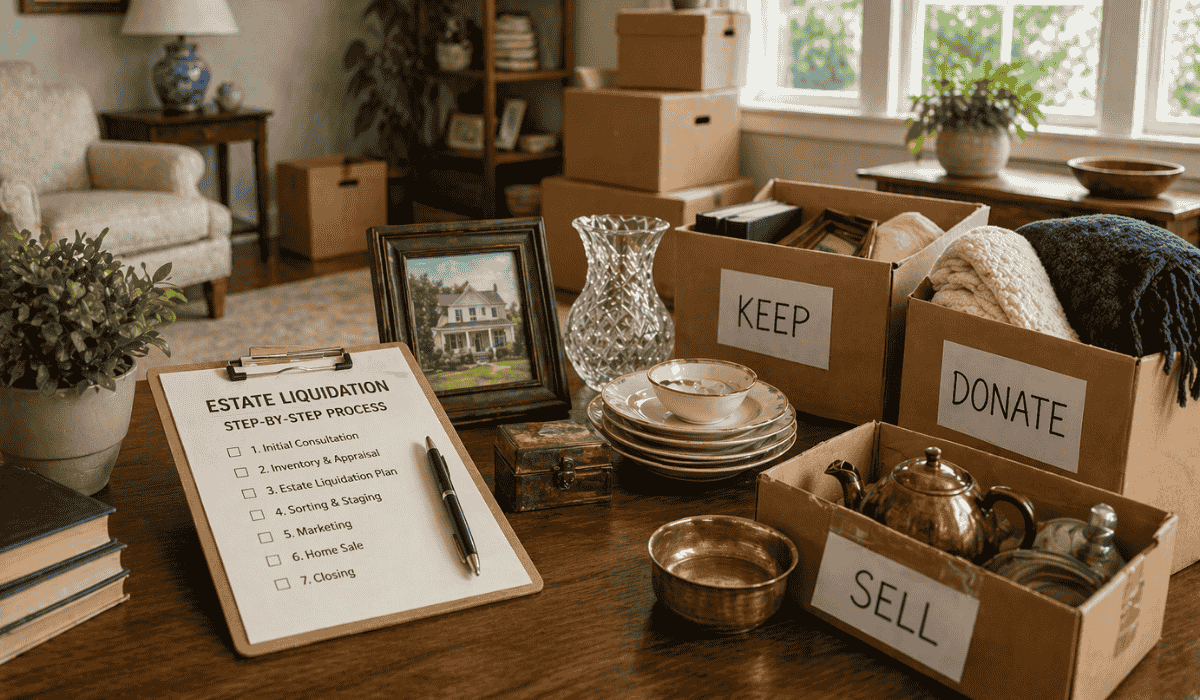
Selling a home after an estate liquidation involves more than just listing it on the market.
It’s a carefully coordinated process that requires sorting, organizing, and sometimes making necessary repairs.
This process can be overwhelming for families, especially when there are multiple tasks to manage.
Here’s a clear roadmap to guide families through the steps of transitioning from an estate sale to listing the inherited home for sale.
Estate Liquidation - Clearing Out Belongings
The first step when selling a home after an estate liquidation is clearing out the personal belongings.
Estate liquidation services help families sort through possessions, deciding which items will be sold, donated, or discarded.
This can be a highly emotional task, especially if the family has lived in the home for many years.
Estate liquidation is crucial because it allows the home to be cleared of personal items, making it easier for potential buyers to imagine themselves living there.
The liquidation process also helps remove clutter, creating a more organized and presentable home.
Important Considerations During Liquidation:
Sentimental Items:
Be sure to carefully remove valuable keepsakes, family heirlooms, and important documents before the liquidation team begins the process.
Inventory and Pricing:
Estate liquidation teams will inventory and price items for sale, helping families get the most value from their belongings.
Donation or Disposal:
Items that don’t have market value can often be donated to charitable organizations or properly disposed of, making the home ready for sale.
Home Repairs and Cleaning
Once the
estate liquidation process is complete, the next step is preparing the home for listing.
The home should be cleaned thoroughly and any necessary repairs should be addressed to make it as attractive to buyers as possible.
Focus on Essential Repairs:
Minor Fixes:
Many inherited homes may require minor repairs such as fixing leaky faucets, patching holes in the walls, or repainting rooms. These repairs can go a long way in improving the home’s appeal.
Cosmetic Improvements:
Consider cosmetic updates such as new carpet, fresh paint, or replacing old fixtures. These updates can increase the home’s perceived value without the need for major renovations.
Deep Cleaning:
A thorough cleaning is essential to make the home feel fresh and inviting. Pay special attention to high-traffic areas like the kitchen, bathrooms, and living areas.
When Major Repairs Aren’t Necessary:
Structural Issues:
If there are significant structural issues such as a leaky roof or foundation problems, it’s best to get estimates for repairs before listing the home.
Renovation Decisions:
Renovations aren’t always necessary, especially if the home is already in good condition. Minor updates are often enough to attract potential buyers.
Staging the Home
Staging the home can make a significant difference in how it is perceived by potential buyers.
While staging may not always be essential, it’s highly recommended, especially if the home has been vacant or has outdated furniture.
Benefits of Staging:
Improved First Impressions:
Well-staged homes photograph better and make a stronger impression during showings, which can lead to more offers.
Visual Appeal:
Staging helps showcase the home’s best features, such as large windows, spacious rooms, or outdoor areas.
Buyer Imagination:
Staging allows buyers to visualize how they would use the space, helping them see the potential of the home.
Staging Tips:
Declutter:
Remove excess furniture or personal items that may make the space feel cramped or cluttered.
Neutral Decor:
Use neutral colors and simple, clean furniture to help buyers focus on the home’s features, not the décor.
Highlight Key Areas:
Focus on staging key rooms like the living room, kitchen, and master bedroom, as these areas have the most impact on buyers.
Listing the Home for Sale
After the estate liquidation and home preparation steps are complete, it’s time to list the property on the market.
Working with a professional real estate agent who has experience with inherited homes can help ensure a smooth transition from estate liquidation to the sales process.
Key Steps in the Listing Process:
Pricing the Home:
Price the home based on a competitive market analysis (CMA), which compares the property with similar homes in the area. Your
real estate agent can assist in determining the right price.
Marketing the Property:
Your agent will create an effective marketing strategy, which may include online listings, open houses, and social media promotions.
Disclosures:
Make sure to disclose any issues with the home that may affect its value. If repairs were made, provide documentation of the work done.
Understanding the Market:
Competitive Market:
Be aware of the local real estate market conditions. If it’s a seller’s market, you may be able to list at a higher price, but in a buyer’s market, it’s important to be competitive with pricing.
Timing:
The timing of the sale can also affect the price. Homes tend to sell faster in spring and summer months, while the winter months may result in longer listing periods.
Negotiation and Offers
Once your property is listed, interested buyers may submit offers. Your real estate agent will help you navigate negotiations and select the best offer.
Keep in mind that offers may vary based on the buyer’s financing options, contingencies, and the state of the local market.
What to Look for in Offers:
Offer Price:
Consider the initial offer price, but don’t be afraid to negotiate if you believe your home is worth more.
Contingencies:
Be aware of contingencies such as financing, home inspections, and appraisal requirements that may delay the sale.
Closing Flexibility:
Some buyers may offer more favorable closing terms that fit your timeline.
Closing the Sale
After reaching an agreement with a buyer, the closing process can begin.
This involves signing legal documents, transferring ownership of the property, and finalizing financial transactions.
Closing Checklist:
Review Contracts:
Ensure that all terms of the sale are clearly stated and agreed upon in the contract.
Final Walkthrough:
The buyer may conduct a final walkthrough before closing to ensure that any repairs or conditions of the sale are met.
Title Transfer: Once all paperwork is signed, the title of the home is officially transferred to the buyer.
Closing Costs:
Be prepared for closing costs, which may include agent commissions, attorney fees, and taxes. Your agent or attorney can provide a detailed breakdown of closing costs before the sale.
Conclusion
Selling an inherited home requires careful coordination between estate liquidation and the home sales process.
By following a step-by-step approach, beginning with clearing out belongings, addressing repairs, staging, and finally listing the transition from liquidation to sale becomes much easier to manage.
With the help of experienced professionals and a solid plan, families can navigate this process smoothly, ensuring a successful sale and a fair price for the home.
Frequently Asked Questions
How long does it take to prepare an inherited home for sale?
Preparing an inherited home for sale can take anywhere from a few weeks to several months, depending on the home’s size, the amount of personal belongings inside, and whether repairs or updates are necessary. Clearing out personal items, making repairs, and staging the home all take time, so it’s important to start early to avoid delays. The timeline can vary, but a well-planned process can significantly reduce the time needed.
Should I make major repairs before listing an inherited home for sale?
While it’s not always necessary to make major repairs, addressing minor fixes and cosmetic improvements can make the home more appealing to potential buyers. Things like patching holes in walls, replacing outdated light fixtures, and repainting rooms can greatly increase the home's marketability. Major renovations, however, may not be worth the investment unless there are significant structural issues that could affect the sale.
Can I sell the inherited home without staging it?
Technically, you can sell the home without staging it, but staged homes often sell faster and for a higher price. Staging can help potential buyers envision how the space can be used and can make a significant difference in how the home photographs for listings and during showings. Simple staging, such as decluttering, adding neutral decor, and enhancing lighting, can be effective in improving a home's appeal.
What should I do with the belongings left behind in the inherited home?
Leftover belongings can be handled in several ways: they can be sold, donated, recycled, or removed entirely. Some families may choose to sell valuable items, while others may donate items to charity or discard items that are no longer usable. It’s often helpful to work with an estate liquidation service to clear out the home and organize items in preparation for sale.