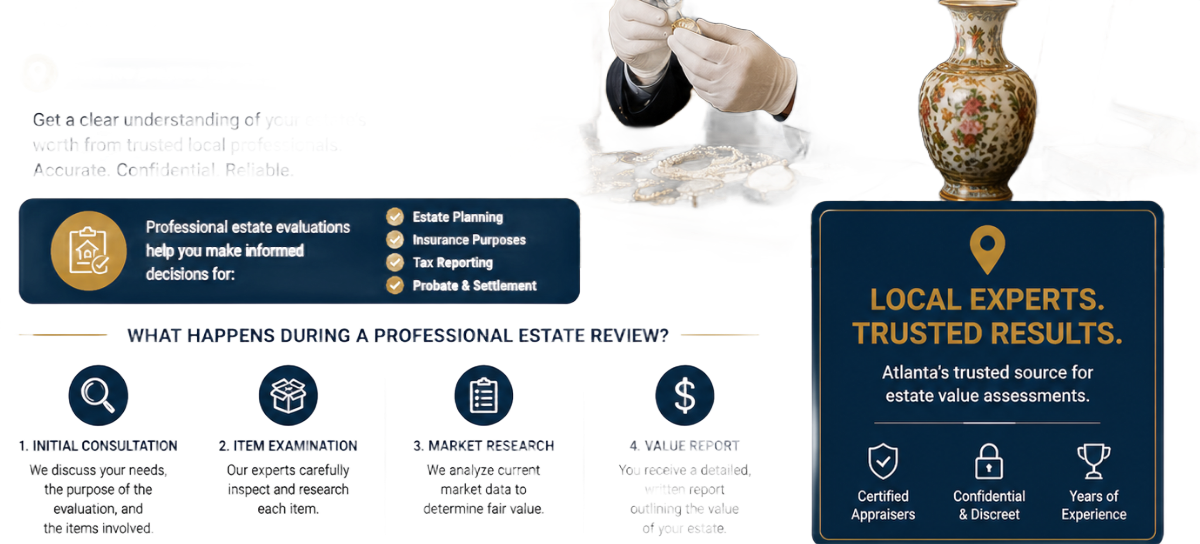
If a home contains belongings to sell, the best route depends on what is inside it, not just what each selling service calls itself. A full household estate sale, a specialty auction and consignment can all be reasonable, but they solve different problems. Some families benefit from combining methods.
The three choices in plain language
An on-site estate sale
An estate sale is generally suited to a household with varied saleable contents that buyers can browse during a scheduled event. It can address many categories in one coordinated process, though not every object will sell and the home may still need final clearance.
A specialty auction
An auction may make sense where a piece or collection has a specialized buyer audience and a suitable auction house agrees to accept it. Final prices depend on bidders, reserve arrangements and the market; an auction can also involve commissions, transport, photography, insurance or other terms.
Consignment
Consignment typically places selected items with a seller that markets them over time and takes an agreed share when they sell. Acceptance standards, markdown schedules, payout timing and return arrangements vary. It can fit a small number of suitable pieces, but it is not necessarily a quick solution for an entire household.
Compare the options against your actual priorities
- Inventory volume: a furnished home with many categories often favors considering an estate sale; a small group of specialized objects may suit another channel.
- Buyer pool: local household buyers differ from bidders seeking one collectible category.
- Time available: an upcoming property closing may limit slow consignment arrangements.
- Logistics: transportation, storage, photography and shipping can materially affect the practical return.
- Fee structure: compare what the provider charges and which expenses remain yours; avoid comparing headline commission percentages in isolation.
- Unsold items: determine who takes responsibility if objects remain after the selling period.
When a mixed approach makes sense
Suppose a house contains ordinary furnishings, kitchenware and tools, plus one unusual collection. A reasonable plan might separate the collection for specialty evaluation while considering the rest for an on-site estate sale
A mixed route can also add time and coordination. Ask whether the potential additional value of specialist handling plausibly exceeds the extra logistics and fees.
What to ask providers before choosing
- Which items will you accept, and which would you decline?
- How will items be priced or valued, and who can authorize changes?
- What commission, fixed fee, transportation or storage charges apply?
- When could selling begin, and when would I receive an itemized accounting and payout?
- Who handles items that do not sell, and what happens at the end of the agreement?
- May some pieces be removed from the arrangement for separate review?
Choose the channel that fits the inventory and the deadline
There is no universally highest-return sales method. A practical decision considers the number and type of items, the buyers available, the effort required, and the deadline for returning the home to its next use. To evaluate whether an estate sale is suitable for your household, see the estate liquidation service and previous estate sales. Then, contact The Perfect Piece Estate Sales to discuss the home's contents.
FAQs
What is estate downsizing?
Estate downsizing is the process of reducing, organizing, and managing belongings during a home transition. It may include sorting, packing, selling, donating, storing, or removing items from a property. This often happens when someone is moving, managing inherited property, or preparing a home for sale.
Why is estate downsizing in Atlanta different from regular decluttering?
Estate downsizing in Atlanta often involves real estate timelines, local donation options, estate sale planning, moving logistics, and family coordination. It is usually more complex than everyday decluttering because the home may contain decades of belongings. Families may also need help identifying valuable or sentimental items.
When should families start the downsizing process?
Families should start as early as possible, especially when there is a move date, listing date, or closing deadline. Long-term homes often take more time to sort than expected. Starting early allows families to make thoughtful decisions instead of rushing through important belongings.
What items are often overlooked during estate downsizing?
Commonly overlooked items include jewelry, coins, documents, photos, military records, deeds, keys, artwork, collectibles, and items stored in attics, basements, garages, and file cabinets. These belongings can be missed during a rushed estate cleanout. A careful room-by-room review helps protect them.
Do families need estate sale services during downsizing?
Estate sale services may be helpful when the home contains many sellable items. Professional support can help with sorting, pricing, staging, marketing, and managing buyers. This can reduce stress for families and help appropriate belongings move through a more organized sale process.
How does senior downsizing work?
Senior downsizing focuses on helping an older adult move into a smaller, safer, and more manageable living space. The process should prioritize daily comfort, accessibility, meaningful belongings, and practical needs. Families should avoid forcing rushed decisions and allow enough time for emotional adjustment.
What should be included in a home transition plan?
A home transition plan should include sorting priorities, valuation review, packing needs, donation plans, estate sale options, cleanout timing, and final home preparation. This gives the family a clear path from the first walkthrough to the final move or property sale. A plan helps reduce stress and confusion.
Can downsizing services help with an estate cleanout?
Yes, downsizing services can help organize belongings before an estate cleanout begins. They can separate items for family, sale, donation, packing, or removal. This prevents important items from being lost and helps prepare the home for its next step.