Estate downsizing in Atlanta is often more complex than families expect because it involves more than removing extra belongings from a home.
It may include sorting decades of personal property, identifying valuable items, preserving sentimental keepsakes, preparing for a move, coordinating donation or removal, planning an estate sale, and getting the home ready for its next stage.
For many families, the process begins during a major life transition, such as helping an aging parent move, preparing an inherited home for sale, or clearing a property after years of accumulated belongings.
Estate downsizing can feel emotional, practical, and time-sensitive all at once.
A family may be trying to meet a closing date, arrange senior living, organize belongings for relatives, or decide what should be sold, donated, packed, or removed.
Without a clear plan, important items can be overlooked, timelines can become stressful, and decisions can become harder than they need to be.
A thoughtful process helps families protect value, reduce stress, and move through the transition with more confidence.
Estate Downsizing Is More Than Decluttering
Estate downsizing is not the same as ordinary decluttering.
Decluttering may involve clearing extra items from a closet or removing things that are no longer used.
Estate downsizing usually involves a much larger life transition. It often requires reviewing everything in the home and making decisions about where each item should go.
This process may include furniture, documents, family photos, jewelry, artwork, collectibles, clothing, tools, décor, kitchenware, books, and personal keepsakes.
Some items may be needed in a smaller home. Some may be passed down to family. Some may be appropriate for estate sale services.
Others may need to be donated, recycled, packed, stored, or removed.
Senior downsizing can be especially sensitive because belongings may represent a lifetime of memories.
A dining table may remind someone of family holidays. A box of letters may hold decades of personal history.
A cabinet of china may have been passed down through generations. Families need a process that respects both practical needs and emotional meaning.
Families Often Underestimate the Timeline
One of the most common mistakes during estate downsizing is underestimating how long the process will take.
Families may think a home can be sorted in a weekend, only to discover that closets, storage rooms, garages, basements, attics, and file cabinets take far more time than expected.
A long-term home can hold years of belongings in places that are not obvious at first.
Boxes may be stacked in storage areas, drawers may contain documents or valuables, and garages may include tools, seasonal items, outdoor equipment, and items saved “just in case.”
Each area requires decisions, and those decisions take time.
Estate downsizing in Atlanta can also involve local moving schedules, property listing deadlines, contractor appointments, estate sale planning, donation pickups, and family travel.
Starting early gives families more time to review belongings carefully instead of rushing before a move or closing date.
The more time a family has, the easier it becomes to make thoughtful choices.
Emotional Decisions Can Slow the Process
Belongings are not just objects during a home transition. They are often connected to memories, relationships, milestones, hobbies, travel, family history, and personal identity.
This is why estate downsizing can become emotionally difficult, even when everyone agrees the move or cleanout is necessary.
Adult children may see items as clutter, while a parent may see them as part of a meaningful life.
Family members may disagree about what should be kept, sold, donated, or thrown away. Some items may have no major resale value but still carry strong sentimental importance.
Other items may have financial value, but the family may not recognize it immediately.
A thoughtful downsizing process gives everyone time to pause and decide carefully. It helps separate emotional decisions from practical ones.
It also allows family members to identify what truly matters before the home is cleared. This can reduce conflict and help the transition feel more respectful.
Hidden Items Are Often Missed in Long-Term Homes
Long-term homes often contain important belongings in unexpected places.
Jewelry may be tucked into a dresser drawer. Coins may be stored in a small box. Documents may be inside old folders. Family photos may be in the attic.
Keys, deeds, insurance papers, military records, and financial documents may be mixed with ordinary papers.
A rushed estate cleanout can cause these items to be lost, donated, or discarded by mistake.
That is why a careful room-by-room review is important before anything leaves the property. Closets, nightstands, desks, file cabinets, storage bins, garages, basements, attics, and sheds should all be checked.
Estate downsizing is easier when families create clear categories before removing items.
Personal documents, family keepsakes, valuables, items for relatives, possible sale items, donation items, and disposal items should be separated.
This reduces confusion and helps protect belongings that may have financial, legal, or sentimental importance.
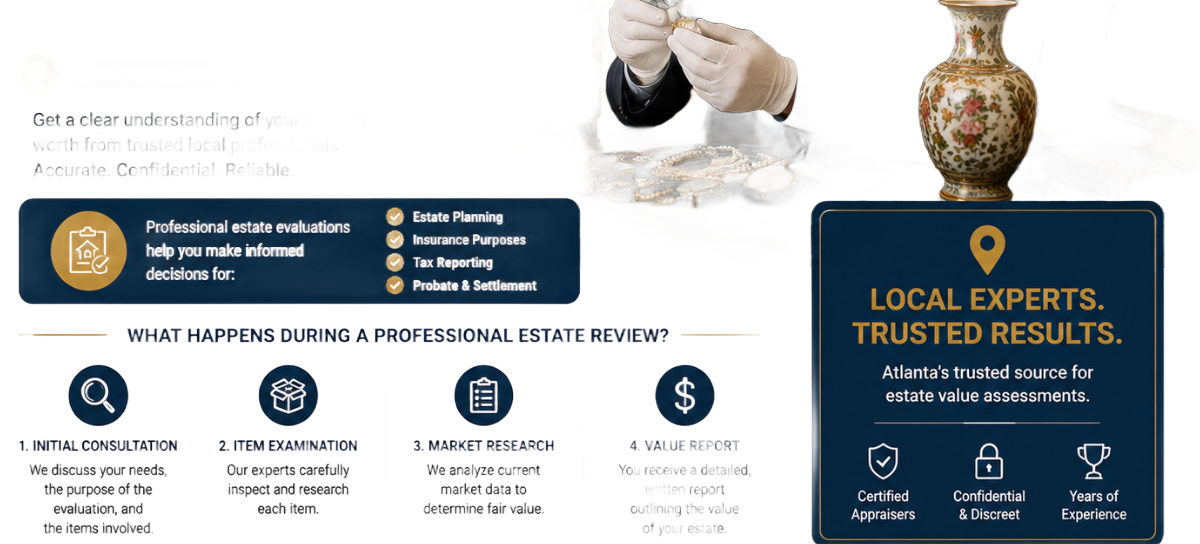
Valuation Is Often Needed Before Selling or Donating
Families often do not know which belongings may have resale value.
Furniture, artwork, antiques, jewelry, silver, coins, collectibles, tools, books, rugs, lamps, and décor may need review before they are donated or discarded.
Some items may be worth less than expected, but others may have more value than they appear to have at first glance.
Estate sale services can be helpful when a home contains many sellable items, but valuation and sorting should happen first. Not every item belongs in a sale.
Some pieces may need specialty review. Some may be better kept by the family. Some may be better suited for donation or removal.
During estate downsizing in Atlanta, local market knowledge can also matter. Buyer demand can vary depending on style, condition, age, and current resale interest.
A thoughtful review helps families avoid rushed decisions and choose the best path for each category of belongings.
Donation and Disposal Planning Should Start Early
Donation and disposal are often more complicated than families expect.
Some organizations may not accept certain furniture, mattresses, damaged items, outdated electronics, or large household goods. Pickup schedules may be limited, and some items may require special removal.
If donation planning is left until the end, families can find themselves with a home full of unsold or unwanted items and very little time to remove them.
This can delay listing the home, preparing for closing, or completing the move. Early planning helps avoid last-minute stress.
An estate cleanout should include a realistic plan for what happens to items that are not kept or sold. Usable items may be donated, while damaged or unusable items may need responsible removal.
Planning this early keeps the transition moving and prevents the home from becoming stuck between stages.
Packing for a Smaller Space Requires Prioritization
Moving into a smaller home, apartment, or senior living community requires careful planning. The question is not simply what the family wants to keep.
It is what will fit, what will be useful, and what will support comfort and safety in the new space.
Senior downsizing should focus on daily needs, accessibility, personal comfort, and meaningful belongings.
Large furniture may not fit. Duplicate kitchen items may not be necessary. Excess décor may create clutter in a smaller space. At the same time, familiar items can help a new home feel comfortable and personal.
A floor plan can help guide packing decisions. Families should consider storage space, walking paths, furniture size, and everyday routines.
Downsizing services can help organize belongings into practical groups so the move feels less overwhelming and the new space remains functional.
Estate Sale Services Can Support a Smoother Transition
Estate sale services may be useful when a home contains many items that can be sold.
A professional sale can help families manage furniture, décor, kitchenware, collectibles, artwork, tools, books, and household goods without trying to sell everything one piece at a time.
A good estate sale process usually includes sorting, organizing, pricing, staging, marketing, and sale-day management.
This can reduce the burden on family members, especially when they live out of town or have limited time.
It can also help turn appropriate belongings into sale proceeds while clearing space in the home.
However, estate sale services work best when the home has been reviewed carefully first.
Personal documents, family keepsakes, valuables, and items promised to relatives should be separated before the sale begins. This prevents mistakes and helps the sale run more smoothly.
Why Local Atlanta Support Matters
Estate downsizing in Atlanta often involves more than sorting belongings.
Families may need to coordinate movers, donation resources, estate sale services, cleanout crews, real estate agents, contractors, and family schedules.
Local experience can make these moving parts easier to manage.
A local provider may understand Atlanta-area logistics, neighborhood access, resale demand, donation options, and timing around home sales.
This can be especially helpful when a family needs to prepare a home quickly or when relatives are managing the process from outside the area.
Local downsizing services can also help connect the practical pieces of the transition.
Sorting, packing, sale preparation, donation planning, and estate cleanout support all work better when they are part of one organized plan.
What a Professional Downsizing Plan Should Include
A professional downsizing plan should begin with a walkthrough and a conversation about the family’s goals.
The provider should understand whether the home is being prepared for a move, estate sale, cleanout, listing, or family distribution.
From there, the process should create clear categories for belongings. A strong plan should include sorting priorities, valuation awareness, packing needs, donation decisions, possible estate sale services, cleanout timing, and final home preparation.
It should also allow time for family members to identify sentimental items and personal documents before anything is removed.
Home transition planning is valuable because it turns an overwhelming project into a series of manageable steps.
Instead of asking the family to make every decision at once, the process creates order. That structure helps reduce stress and protects belongings that matter.
Common Mistakes Families Should Avoid
One common mistake is waiting too long to begin. The closer the move or sale deadline gets, the harder it becomes to make thoughtful decisions.
Another mistake is throwing away items before they have been reviewed. Even items that seem ordinary may have sentimental or resale value.
Families may also make the mistake of packing too much for a smaller space. This can create stress after the move because the new home becomes crowded quickly.
It is better to prioritize items that are useful, meaningful, and appropriate for the new living environment.
Another mistake is trying to manage everything without help when the process is too large.
Estate downsizing can involve physical work, emotional decisions, market knowledge, packing, donation, and cleanout planning.
Professional support can make the process more organized and less stressful.
Conclusion: Estate Downsizing Works Best With a Clear Plan
Estate downsizing in Atlanta is a major home transition, not a simple decluttering project.
Families often overlook the time required, the emotional weight of belongings, the risk of missing hidden valuables, the need for valuation, and the importance of donation, packing, and cleanout planning.
A careful process helps families protect what matters, reduce stress, and prepare the home for its next step.
Whether the transition involves senior downsizing, inherited property, a move, an estate cleanout, or estate sale services, starting early and following a structured plan can make the experience smoother and more manageable.
Get Estate Downsizing Support From The Perfect Piece Estate Sales in Atlanta
The Perfect Piece Estate Sales in Atlanta specializes in estate downsizing, providing families with care, organization, and practical support.
Our team can assist with sorting, packing, home transition planning, valuation awareness, donation coordination, estate cleanout support, and estate sale services.
If your family is preparing for a move, inherited home transition, senior downsizing project, or full-home cleanout, The Perfect Piece Estate Sales in Atlanta can help you create a clear plan from start to finish.
Contact our team for professional downsizing services designed to reduce stress and support a smoother transition.
FAQs
What is estate downsizing?
Estate downsizing is the process of reducing, organizing, and managing belongings during a home transition. It may include sorting, packing, selling, donating, storing, or removing items from a property. This often happens when someone is moving, managing inherited property, or preparing a home for sale.
Why is estate downsizing in Atlanta different from regular decluttering?
Estate downsizing in Atlanta often involves real estate timelines, local donation options, estate sale planning, moving logistics, and family coordination. It is usually more complex than everyday decluttering because the home may contain decades of belongings. Families may also need help identifying valuable or sentimental items.
When should families start the downsizing process?
Families should start as early as possible, especially when there is a move date, listing date, or closing deadline. Long-term homes often take more time to sort than expected. Starting early allows families to make thoughtful decisions instead of rushing through important belongings.
What items are often overlooked during estate downsizing?
Commonly overlooked items include jewelry, coins, documents, photos, military records, deeds, keys, artwork, collectibles, and items stored in attics, basements, garages, and file cabinets. These belongings can be missed during a rushed estate cleanout. A careful room-by-room review helps protect them.
Do families need estate sale services during downsizing?
Estate sale services may be helpful when the home contains many sellable items. Professional support can help with sorting, pricing, staging, marketing, and managing buyers. This can reduce stress for families and help appropriate belongings move through a more organized sale process.
How does senior downsizing work?
Senior downsizing focuses on helping an older adult move into a smaller, safer, and more manageable living space. The process should prioritize daily comfort, accessibility, meaningful belongings, and practical needs. Families should avoid forcing rushed decisions and allow enough time for emotional adjustment.
What should be included in a home transition plan?
A home transition plan should include sorting priorities, valuation review, packing needs, donation plans, estate sale options, cleanout timing, and final home preparation. This gives the family a clear path from the first walkthrough to the final move or property sale. A plan helps reduce stress and confusion.
Can downsizing services help with an estate cleanout?
Yes, downsizing services can help organize belongings before an estate cleanout begins. They can separate items for family, sale, donation, packing, or removal. This prevents important items from being lost and helps prepare the home for its next step.