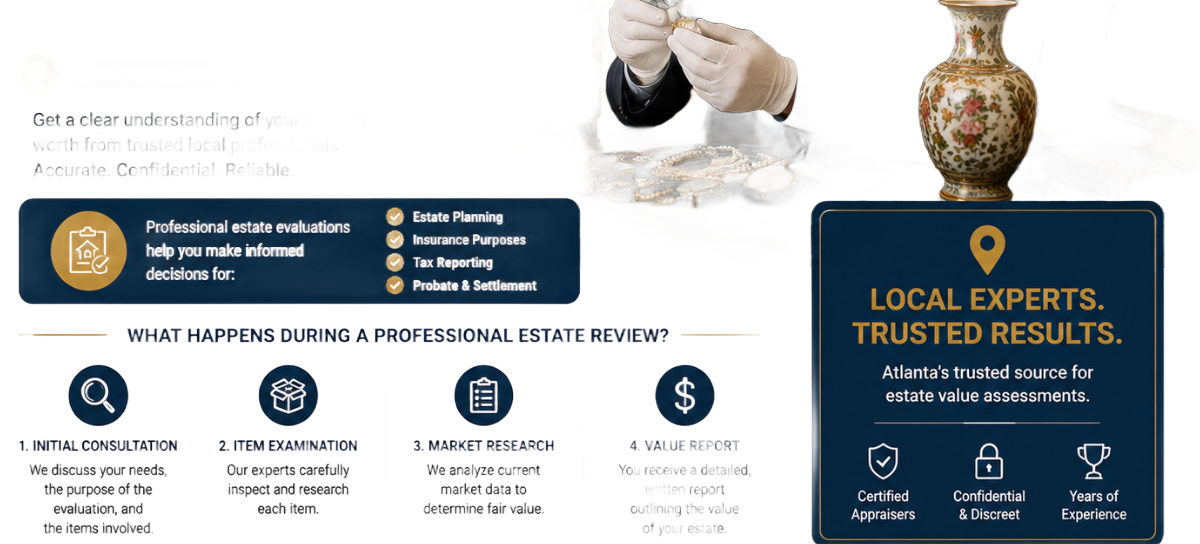
Estate liquidation professionals vs DIY decisions often determine whether a large estate preserves its true value or loses money through avoidable mistakes.
While estate liquidation may seem manageable at first, estates involving significant assets, specialized items, or legal oversight require far more than basic selling effort.
Professional judgement, structured execution, and market expertise become essential once complexity enters the picture.
This guide explains why
DIY estate liquidation risks increase with estate size, how
professional estate liquidation services protect value, and why experienced specialists are critical for efficient, compliant, and financially sound outcomes.
How Is an Estate Liquidation a Strategic Financial Process?
Large and complex estate liquidation involves converting personal property into maximum realizable value while balancing financial, logistical, legal, and emotional considerations.
Unlike a simple estate sale, this process may involve fluctuating market values, rare or authenticated items, and extensive coordination with executors or probate requirements.
Estate marketing and valuation decisions, such as pricing, timing, and sales channel selection, directly influence final proceeds, which is why
strategic planning is essential for successful estate liquidation sales.
Without professional oversight, these decisions are often made without sufficient market context, leading to undervaluation, delayed sales, or missed buyer opportunities.
Why DIY Estate Liquidation Becomes Risky as Estate Size Grows
DIY estate liquidation tends to rely on assumptions rather than proven systems. While manageable for very small estates, complexity quickly introduces challenges that compound over time.
As estate size increases,
estate liquidation professional vs DIY approaches begin to show clear performance gaps.
DIY efforts commonly struggle with:
- Inconsistent valuation across asset categories
- Delayed timelines due to underestimated workload
- Missed opportunities to reach qualified buyers
- Emotional fatigue affecting decision-making
In contrast,
professional estate liquidation services rely on structured processes, market expertise, and coordinated planning to address these challenges.
Professionals bring established valuation methods, organized workflows, and access to qualified buyers, helping estates avoid prolonged administration and achieve stronger financial outcomes.
What often begins as a cost-saving DIY approach frequently results in lower total proceeds, whereas professional involvement helps protect value and maintain momentum throughout the liquidation process.
Hidden Costs of DIY Estate Sale and the Emotional Impact of Estate Liquidation
When evaluating estate liquidation professional vs DIY approaches, the financial and emotional consequences of managing the process alone are often underestimated.
Hidden Costs of DIY Estate Sale
The
hidden costs of DIY estate sale efforts rarely appear as line items on a budget.
Instead, they surface through undervalued assets, extended timelines, increased physical and administrative workload, security concerns, and limited exposure to serious buyers.
Over time, these hidden losses reduce overall estate value far more than anticipated.
Emotional Impact of Estate Liquidation
The
emotional impact of estate liquidation often follows loss, downsizing, or major life transitions.
Emotional attachment to belongings can delay sales, distort pricing decisions, or create disagreements among heirs.
Without professional oversight, emotional strain can intensify operational challenges and further reduce efficiency.
How Professionals Address Both Challenges
Professional estate liquidation services help mitigate both financial and emotional pressures by providing neutral guidance, structured planning, and market-driven execution.
This balanced approach allows estates to move forward efficiently while protecting value and minimizing stress for families and executors.
The Unseen Workload Associated with Sales Planning and Estate Logistics
Estate liquidation requires coordinated execution across multiple stages, including asset sorting, research, pricing, staging, security, transaction handling, and final cleanout.
Effective
estate logistics and sales planning ensure items are tracked, protected, marketed, and sold efficiently.
Professional estate liquidation services rely on established workflows to prevent bottlenecks and reduce errors.
Without these systems, DIY efforts often experience stalled decisions, incomplete sales, and extended holding periods that reduce asset value.
Appraising Estate Assets Requires Market Knowledge
One of the most costly DIY mistakes involves incorrectly
appraising estate assets.
Online price comparisons rarely reflect real buyer demand, condition nuances, provenance, or market timing.
Professional estate liquidators understand how rarity, authenticity, and demand cycles influence pricing.
Their experience allows them to adjust valuations strategically, ensuring assets are positioned for real-world demand rather than assumptions.
Estate Marketing and Valuation Depend on Buyer Reach
Even accurately priced assets underperform without exposure to the right audience.
DIY liquidation typically relies on local buyers or general platforms that attract bargain-focused shoppers.
Professional estate liquidation services leverage established buyer networks, targeted outreach, and proven marketing channels.
These
estate sale/liquidation company benefits create competition among qualified buyers, directly improving results across asset categories.
Legal and Tax Considerations in Estate Liquidation Add Complexity
Large estates introduce legal and financial responsibilities that extend well beyond selling belongings.
Legal and tax considerations in estate liquidation are often underestimated in DIY scenarios, particularly when multiple assets, beneficiaries, or deadlines are involved.
Even small oversights can create delays or expose executors to unnecessary risk.
Professional estate liquidators understand how liquidation aligns with broader estate administration and help manage critical areas such as:
- Accurate documentation of asset disposition and sale proceeds
- Coordination with executor duties and probate timelines
- Secure handling and tracking of funds throughout the process
- Support for compliance with reporting and record-retention requirements
- Reduction of disputes caused by inconsistent or unclear transactions
By applying structured oversight and clear documentation, professional liquidators help estates move through the liquidation phase with fewer interruptions.
This approach also helps in reducing liability and increasing confidence for everyone involved.
Why Professional Estate Liquidation Delivers Measurable Value
Professional estate liquidation is not about convenience—it is about control, accuracy, and accountability.
Professional estate liquidation services provide:
- Market-driven pricing strategies
- Structured logistics and inventory control
- Access to qualified buyers
- Transparent reporting and predictable timelines
For families managing
complex estate liquidation challenges, professional guidance safeguards both financial outcomes and peace of mind.
At
The Perfect Piece Atlanta, we specialize in large and complex estates, applying disciplined processes and market insight to ensure assets are handled responsibly and efficiently.
Conclusion
Choosing
estate liquidation professionals vs DIY methods ultimately determines whether an estate achieves its full potential or absorbs avoidable losses.
Accurate valuation is one of the most critical factors in this decision, as valuation errors are among the most expensive mistakes in DIY estate liquidation.
Online price comparisons rarely reflect true selling conditions, buyer intent, or shifting demand cycles, often resulting in undervalued assets and missed opportunities.
For large or complex estates, professional estate liquidation services provide the expertise, objectivity, and structured systems required to protect value, reduce stress, and ensure a compliant, efficient process.
This professional insight ensures estate assets are positioned for real-world demand rather than guesswork, allowing estates to move forward with confidence and financial clarity.
Why Choose Us for Estate Liquidation?
If you are responsible for a large or complex estate and want to avoid costly missteps, our professional estate liquidation services can make a meaningful difference.
We provide expert guidance designed to protect asset value, reduce stress, and ensure the process moves forward efficiently and responsibly.
Contact The Perfect Piece Atlanta to discuss your estate and learn how experienced professionals can help you navigate estate liquidation with confidence.
Frequently Asked Questions
Why is estate liquidation not recommended as a DIY project for large estates?
Large estates involve diverse assets, significant value, and complex logistics. DIY approaches often lack the expertise needed for accurate valuation, proper marketing, and efficient execution, which can reduce overall returns and delay estate settlement.
What are the most common DIY estate liquidation risks?
DIY estate liquidation risks include mispricing valuable assets, limited buyer reach, compliance oversights, security concerns, and emotional decision-making that negatively affects outcomes.
How do professional estate liquidation services increase total proceeds?
Professional estate liquidation services use expert valuation, structured logistics, and established buyer networks to attract serious buyers and create competition that improves final sale results.
What complex estate liquidation challenges require professional support?
Complex estate liquidation challenges include high-value collections, multiple stakeholders, probate timelines, and legal responsibilities that require coordinated planning and execution.
Why is appraising estate assets difficult without professional experience?
Appraising estate assets requires understanding condition, authenticity, provenance, and market timing. Without expertise, DIY pricing often fails to reflect real buyer demand.
How do estate logistics and sales planning affect liquidation results?
Estate logistics and sales planning ensure assets are tracked, secured, marketed, and sold efficiently, reducing delays and protecting estate value.
What are the hidden costs of DIY estate sale efforts?
Hidden costs of DIY estate sale approaches often go beyond visible expenses and show up in reduced overall returns. These include undervalued assets due to inaccurate pricing, extended timelines caused by underestimated workload, and missed opportunities to reach qualified buyers. DIY efforts can also increase stress, security concerns, and administrative burden for executors and families.
How does the emotional impact of estate liquidation affect decision-making?
The emotional impact of estate liquidation can influence pricing decisions, delay sales, and create disagreements among heirs, especially after loss or major life changes. Emotional attachment may cause items to be held too long or priced unrealistically. Professional oversight helps maintain objectivity, ensuring decisions are guided by market realities rather than sentiment.
When should I contact a professional estate liquidator?
Early involvement is best when managing an estate, particularly if it includes valuable, specialized, or high-volume assets. Consulting a professional at the start helps prevent valuation errors, legal or compliance issues, and inefficient planning. Early guidance also creates a clearer strategy, reducing delays and protecting overall estate value.